


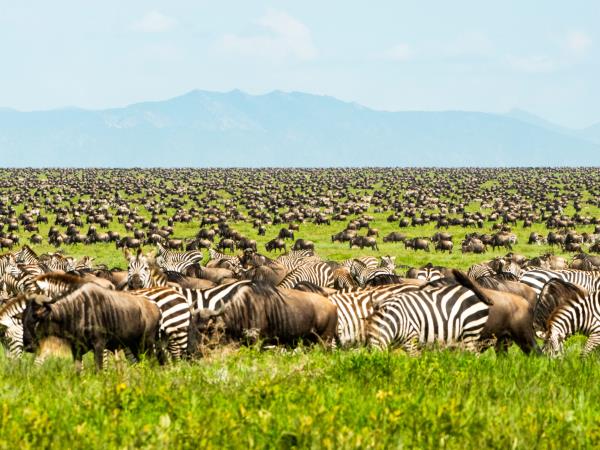
A wildebeest migration tour in Serengeti National Park is one of the most extraordinary wildlife experiences on the planet. Often hailed as the “Great Migration,” this annual phenomenon involves over a million wildebeest, accompanied by hundreds of thousands of zebras and gazelles, journeying across Tanzania’s iconic plains in search of fresh grazing and water. This continuous movement of herbivores, coupled with the predators that follow, creates a dynamic, ever-changing spectacle that is both thrilling and awe-inspiring.
The Serengeti: Heart of the Migration
The Serengeti is a vast ecosystem that spans approximately 14,750 square kilometers in northern Tanzania. Its name, derived from the Maasai word “Siringet,” means “endless plains,” which perfectly describes its expansive grasslands, acacia woodlands, riverine forests, and kopjes (rocky outcrops). These diverse landscapes provide the ideal conditions for the wildebeest migration to unfold, supporting not only the migratory herds but also predators such as lions, cheetahs, leopards, hyenas, and crocodiles.
The Serengeti is more than just a backdrop; it is an active participant in the migration. Seasonal rainfall dictates the movement of the herds, creating a natural rhythm that guides wildlife photographers, safari enthusiasts, and ecologists alike.
The Migration Route
The Great Migration follows a circular route of approximately 1,800 miles (2,900 kilometers) through Tanzania and into Kenya. The journey begins in the southern Serengeti, where wildebeest calves are born between January and March, coinciding with the region’s short rains. These young animals, along with their mothers, must quickly adapt to the savannah environment, as predators abound.
As the dry season approaches, the herds move northwest toward the central Serengeti and eventually into the northern Serengeti, reaching the Mara River around July. The river crossings mark some of the most dramatic moments of the migration, where wildebeest confront strong currents and crocodile-filled waters. By October, the herds begin their southward journey back to the Serengeti plains, completing the annual cycle.
 Best Time for a Wildebeest Migration Tour
wildebeest migration tour in Serengeti is crucial for witnessing key events:
- January to March: Calving season in the southern Serengeti. This is the perfect time to see thousands of newborn wildebeest and the predator-prey dynamics that naturally follow.
- April to June: The herds gradually move northwest through central Serengeti. This period coincides with lush green landscapes and excellent photography conditions.
- July to October: Northern Serengeti and Mara River crossings. This is the peak season for witnessing dramatic river crossings and predator activity.
- November to December: The herds return southward to the southern Serengeti in search of fresh grazing.
The timing depends on your focus—whether it is observing the calving season, predator interactions, or river crossings.
River Crossings: The Pinnacle of Migration Drama
The Mara River and other tributaries of the Serengeti provide some of the most iconic images of the Great Migration. Crossing these rivers is a life-or-death struggle for the wildebeest, especially calves and weaker individuals. Crocodiles lie in wait, and the fast-flowing currents pose significant threats.
These crossings are chaotic and unpredictable. Herds hesitate at the banks, animals leap into water en masse, and those unable to swim are swept away. The drama is heightened by the presence of predators on riverbanks and nearby plains, ready to capitalize on any vulnerability. For photographers and wildlife enthusiasts, witnessing and capturing a river crossing is the ultimate highlight of a migration tour.
Predator Dynamics
Predators are intimately tied to the wildebeest migration. Lions, leopards, cheetahs, and hyenas follow the herds, taking advantage of opportunities to hunt. Lions often lie in wait near riverbanks or kopjes, while cheetahs and leopards stalk along the plains and woodlands. Hyenas, as opportunistic hunters, exploit kills and scavenge weak animals.
These predator-prey interactions are a critical part of the ecosystem and offer unique observational and photographic opportunities. Watching the balance of survival unfold is one of the most compelling aspects of a Serengeti wildebeest migration tour.
Other Wildlife and Birds
While wildebeest are the stars, the migration attracts a diversity of other wildlife. Zebras often lead the herds, grazing on coarser grasses and trampling vegetation, which facilitates wildebeest feeding. Thomson’s gazelles and Grant’s gazelles join the migration, navigating the plains with agility and speed.
Birdlife is abundant during the migration, including raptors like the martial eagle, African fish eagle, and secretary bird, as well as scavengers such as vultures. Their interactions with the migrating herds provide additional depth and interest for bird watchers and photographers.
Photography and Observation Tips
The Serengeti offers unparalleled opportunities for wildlife photography:
- Telephoto lenses: Essential for capturing distant wildlife or predator-prey action. Lenses between 300mm and 600mm are ideal.
- Wide-angle lenses: Perfect for expansive landscapes and herd compositions.
- Golden hours: Early morning and late afternoon provide soft light, long shadows, and dramatic skies.
- Guided safaris: Experienced guides understand animal behavior, increasing the likelihood of witnessing river crossings and predation events.
- Patience: Migration events are unpredictable. Staying in one area for extended periods can yield extraordinary observations.
Conservation and Ecotourism
The Serengeti and surrounding conservation areas play a critical role in maintaining the migration. Habitat protection, anti-poaching measures, and community-based conservation initiatives ensure the sustainability of this natural wonder. Tourism revenue contributes directly to these efforts, incentivizing local communities to protect wildlife and migratory corridors.
Responsible travel practices, including adhering to park rules, maintaining safe distances, and supporting eco-friendly lodges, help ensure the migration continues to thrive for future generations.
Cultural Connections
The migration is intertwined with the traditions and livelihoods of the Maasai people. These semi-nomadic communities coexist with wildlife, grazing their cattle alongside the migratory herds. Visits to Maasai villages offer insight into traditional customs, beadwork, and community-led conservation initiatives, enriching the safari experience.
Experiencing the Migration
A wildebeest migration tour is more than a safari—it is an immersive journey into one of the world’s most complex and vibrant ecosystems. Travelers witness the struggle for survival, the rhythms of nature, and the remarkable interdependence of species. The scale, drama, and spectacle of the migration are unmatched, offering memories that last a lifetime.
Whether observing a thousand wildebeest crossing the Mara River, capturing predator-prey interactions, or photographing herds stretching to the horizon, a migration tour in the Serengeti delivers an unforgettable encounter with the raw power and beauty of the African wilderness.
Conclusion
The wildebeest migration in the Serengeti is not just an event; it is a celebration of life, resilience, and the natural order. It combines the drama of predator-prey dynamics, the spectacle of river crossings, and the sheer scale of one of Earth’s largest terrestrial animal migrations.
For travelers, photographers, and wildlife enthusiasts, a Serengeti wildebeest migration tour is a once-in-a-lifetime experience—a chance to witness nature at its most raw, dynamic, and breathtaking. It is a story of survival and adaptation, of movement and life, unfolding across Africa’s iconic plains, and it continues to inspire awe, respect, and a profound connection to the wild.